Preview

Scriptorium slavicum

Advanced search
No 1 (2026)
View or download the full issue PDF (Russian)

ARCHAEOGRAPHY OF BOOK MONUMENTS

9-56 61
Abstract

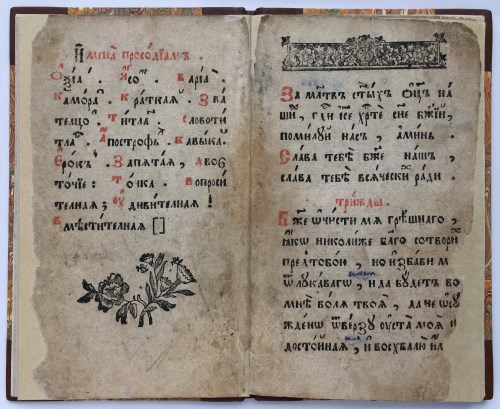
The article deals with insufficiently studied history of book printing in Jassy in the late 18th century, where as well as books for Old Believers were published. The printing houses of the Metropolis and Mihail Strilbițchi, as well as Prince Grigory Potemkin's field printing office were engaged in publishing activities during this period. The author provides information about the published books and the features of their design, allowing to attribute books to a particular printing house. Due to the involvement of documentary sources, the author recovers the history of the migration of Klintsy printing facilities during the Russian-Turkish War of 1787–1792 and after that, up to the second decade of the 19th century. The appendix to the article contains a description some Old Believer Alphabet books from the author's personal collection including Azbuka, issued by the printing house of Antoni "Prot" Potocki in Makhnivka as well as Azbuka published in A. Karthashov's printing house in Klintsy

57–81 44
Abstract

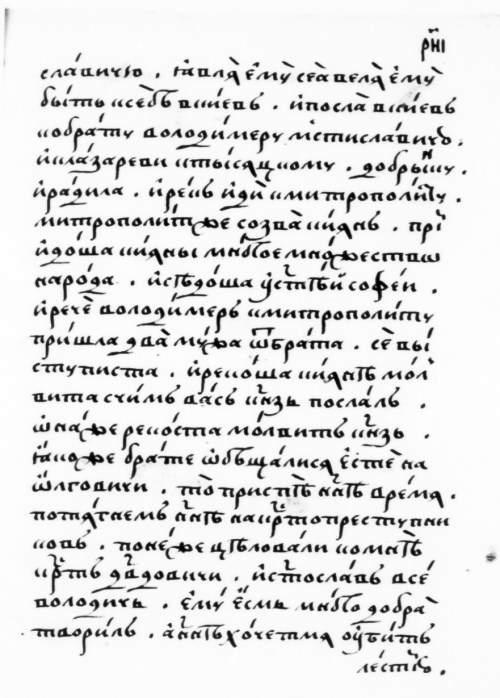
This article makes available the author’s half-century-old, previously unpublished palaeographic analysis of a group of manuscripts which, he argues, were probably copied in the same scriptorium in or near Kholmogory. The proposed location is the main cathedral of the town in the period prior to the appointment of the noted bookman Archbishop Afanasy to the episcopal see.  Even though there is now a substantial literature on manuscript production and libraries in the Russian North, much additional study is needed to identify the output of individual scriptoria.

IN MEMORIAM

ISSUES OF TEXTUAL CRITICISM AND POETICS OF OLD RUSSIAN LITERATURE

84–125 31
Abstract

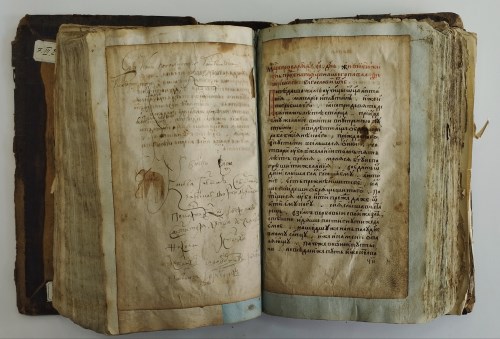
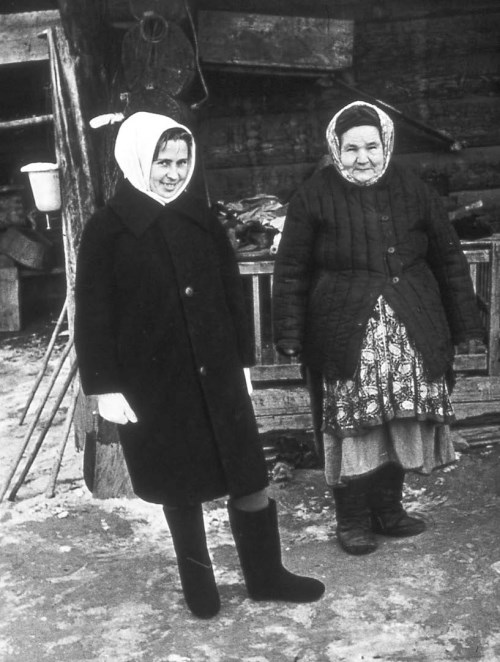
The purpose of this article is to present the results of a codicological study of the convolute F.III.26 in the Zabaikal’skaya (Transbaikal) collection of rare books and manuscripts in the Ancient Depository named after E. I. Dergacheva-Skop of SPSTL SB RAS (Novosibirsk). The study found that the convolute was compiled in Siberia around 1805 by Old Believer fur traders that operated via the city of Irkutsk. The book's location in the vicinity of Bichura, an Old Believer village in Buryatia, where it was discovered by archaeographers in 1959, has been traced since the late 19th century. Furthermore, the article provides a scientific description of four manuscripts that make up the convolute. The oldest of them dates back to the second quarter of the 17th century, and contains one of the earliest copies of the Tale of Ioann and Longin of Yarenga. The Pomor village of Yarenga in the Russian North has been identified as the original location of the manuscripts from inscriptions. The other three manuscripts in the book are Old Believer in origin, two of them having been written shortly before the compilation of the convolute. 

126–139 30
Abstract

The article is devoted to the study of the text of the Kiev-Pechersk Patericon in the manuscript miscellanea of the 19th century that were in use in Siberia. The study of the late manuscript tradition, which is usually outside the close attention of researchers, is an important and urgent task that requires the use of as many copies as possible. Miscellanea compiled among Siberian Old Believers in the 19th century demonstrate a new stage in the literary history of the book, when the Patericon breaks down into separate episodes about the monks of the Kievan Caves Monastery, which are transformed into their vitae. Despite the fact that after the 17th century the Kiev-Pechersk Patericon was practically not copied in its entirety (today only a few copies of the Patericon from the 18th and 19th centuries are known), it remained in the Siberian reading repertoire. This is confirmed by the discovery of Siberian archaeographers, which is the main focus of this article – the Old Believer manuscript Q.II.4. late 19th century from the E.I. Dergacheva-Skop Ancient Repository of the State Public Scientific and Technological Library of the Siberian Branch of the Russian Academy of Sciences. This manuscript is part of the so-called Tomsk collection of the Ancient Repository. The Tomsk manuscript was unknown to researchers of the Kiev-Pechersk Patericon and had not been mentioned previously in any typological- textual analysis of copies of the book. The manuscript is a collection, in addition to the Patericon it includes a text entitled "On the End of the World and the Day of Judgement", which is the last, thirtieth chapter of the "Book of Faith" often quoted by Old Believers. As a result of the textual analysis of the Patericon in the Tomsk manuscript, it is concluded that the copy of the Kiev-Pechersk Patericon, dating back to the end of the 19th century, accurately conveys the text of the 15th century, namely the II-Kassian edition of the book of 1462.


Creative Commons License
This work is licensed under a Creative Commons Attribution 4.0 License.


ISSN 3034-4913 (Print)